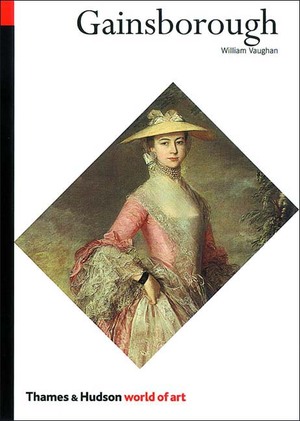
Gainsborough is one of the most appealing artists of the eighteenth century. Renowned for such elegant portraits as The Blue Boy and Countess Howe, he also pioneered a new form of landscape with a moody sensibility that prefigured the Romantic movement. He was a brilliant draftsman, and his art is full of inventiveness and visual delight.
William Vaughan draws on recently discovered material to provide a fresh perspective on both the life and art of this master. He shows how closely Gainsborough’s innovative manner can be connected to social and political developments in Britain, in particular the celebration of original genius in a time of burgeoning entrepreneurial commercialism. Above all, he demonstrates how, beneath the artist’s charm, there lay a bedrock of shrewd observation and pictorial intelligence that gives his work a value for all time.
Contributors
William Vaughan
Author
William Vaughan is Professor of the History of Art at Birkbeck College, London. After studying at the Ruskin School of Art in Oxford and the Courtauld Institute, London, he became an Assistant Keeper at the Tate Gallery, London. In 1972 he was appointed as lecturer at University College, London, until he took up the professorship at Birkbeck. He is the author of numerous articles and books on eighteenth- and nineteenth-century painting, including Romanticism and Art (2nd edition, 1994). In 1998 he was chosen to deliver the Paul Mellon Lectures at the National Gallery, London, on the subject of British Painting. Professor Vaughan is married with two children.